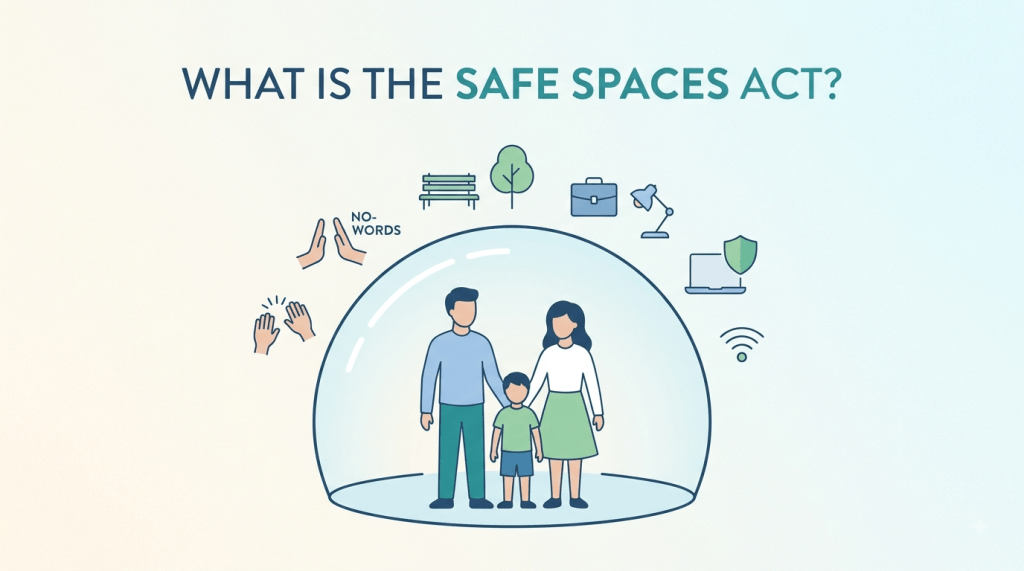
Republic Act No. 11313, officially titled the “Safe Spaces Act” (popularly known as the Bawal Bastos Law), was enacted on 17 April 2019, to expand state protection against gender-based sexual harassment across physical, online, and institutional domains.
Policy Declaration and Statutory Intent
The legislative purpose of the Act is grounded directly in Section 2, which provides:
“Section 2. Declaration of Policy. — It is the policy of the State to value the dignity of every human person, guarantee full respect for human rights, ensure the fundamental equality before the law of women and men, eliminate the development of stereotypes and pre-conceived ideas that perpetuate discrimination and violence, and recognize the role of women in nation-building. Towards this end, the State shall guarantee the safety and security in public spaces, online, workplaces, and educational or training institutions of all individuals regardless of sex, sexual orientation, and gender identity and expression.”
Scope of Coverage and Prohibited Acts
Unlike earlier laws, such as Republic Act No. 7877 (The Anti-Sexual Harassment Act of 1995), which strictly governed situations involving superior-subordinate relationships, Republic Act No. 11313 broadens liability to acts committed by any person, including strangers and peers, across distinct spaces:
- Streets and Public Spaces: Section 4 defines gender-based streets and public spaces sexual harassment as:“Section 4. Gender-Based Streets and Public Spaces Sexual Harassment. — The crimes of gender-based streets and public spaces sexual harassment are committed through any unwanted and uninvited sexual actions or remarks against any person regardless of the motive for committing such action or remarks.”Prohibited acts under Section 11 include catcalling, wolf-whistling, intrusive gazing, unwanted invitations, misogynistic or homophobic slurs, flashing, public masturbation, and unwanted physical contact like groping.
- Online Spaces: Section 12 establishes liability for digital harassment:“Section 12. Gender-Based Online Sexual Harassment. — Gender-based online sexual harassment includes acts that use information and communications technology in terrorizing and intimidating victims through physical, psychological, and emotional threats, unwanted sexist remarks, cyberstalking, and the unauthorized posting or sharing of victim’s photos, videos, or information.”
- Workplaces and Educational Institutions: Section 16 and Section 21 cover institutional spaces, removing the requirement of moral ascendancy or power hierarchy:“Section 16. Gender-Based Sexual Harassment in the Workplace. — The crime of gender-based sexual harassment in the workplace includes the following: (a) An act involving any unwelcome sexual advances, requests or demand for sexual favors… (b) Any conduct of a sexual nature… affecting the dignity of a person… (c) Any conduct that is unwelcome and pervasive and creates an intimidating, hostile or humiliating environment…”
Legal Duties of Employers and Institutions
The Act mandates affirmative duties for administrative heads under Section 17 and Section 21:
“Section 17. Duties of Employers. — Employers and other persons of authority, influence or moral ascendancy in the workplace shall have the duty to prevent, deter, or punish acts of gender-based sexual harassment in the workplace…”
Failure to create an internal Committee on Decorum and Investigation (CODI) or to act on reported complaints directly exposes institutions and employers to administrative liability and statutory fines.
DISCLAIMER: This article is for educational and informational purposes and should not be considered formal legal advice. If you need assistance in any potential violations of the Safe Spaces Act in Cebu City, Mandaue, and Lapu-Lapu or anywhere in Cebu Province, consult with a legal professional.


Leave a Reply